
Patient Journey
الحَوَل
ما هو الحَوَل؟
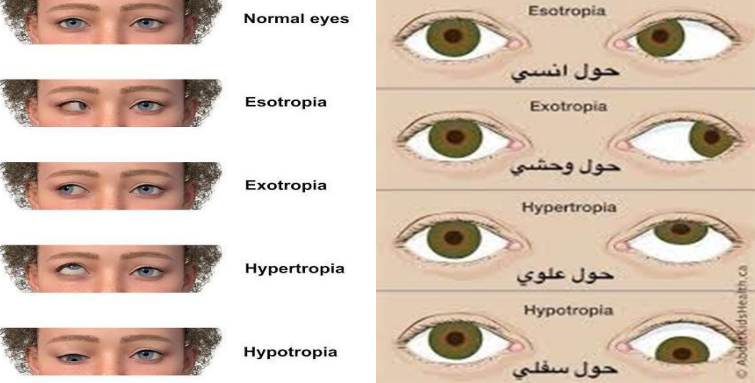
الحَوَل هو حالة لا تتجه فيها العينان إلى الاتجاه نفسه في الوقت ذاته. فقد تنحرف إحدى العينين إلى الداخل (حول إنسي)، أو إلى الخارج (حول وحشي)، أو إلى الأعلى، أو إلى الأسفل، بينما تنظر العين الأخرى مباشرةً إلى الأمام.
ما هى أنواع الحَوَل؟
تشمل الأنواع الرئيسية للحَوَل ما يلي:
-
الحَوَل الإنسي (Esotropia): تنحرف العين إلى الداخل.
-
الحَوَل الوحشي (Exotropia): تنحرف العين إلى الخارج.
-
الحَوَل الرأسي: تنحرف العين إلى الأعلى (Hypertropia) أو إلى الأسفل (Hypotropia).
-
الحَوَل الكامن (Phoria): حول غير ظاهر، ولا يظهر إلا عند تغطية إحدى العينين.
-
الحَوَل الظاهر (Tropia): يكون موجودًا بشكل مستمر حتى مع فتح كلتا العينين.
ما أسباب الحَوَل؟
-
-
عيوب الإبصار، مثل طول النظر.
-
اختلال التوازن بين العضلات المسؤولة عن حركة العين.
-
مشكلات في الدماغ أو الأعصاب التي تتحكم في حركة العين.
-
بعض الحالات أو المتلازمات الوراثية، مثل متلازمة داون.
-
إصابات أو صدمات العين.
-
ضعف الرؤية في إحدى العينين.
-
ما هي الأعراض والعلامات السريرية للحَوَل؟
-
-
انحراف إحدى العينين عن وضعها الطبيعي.
-
ازدواجية الرؤية.
-
إغلاق أو تغطية إحدى العينين عند التعرض للضوء الساطع.
-
اتخاذ وضعية غير طبيعية للرأس، مثل إمالته أو تدويره.
-
ضعف إدراك العمق (الرؤية المجسمة).
-
كسل العين (الغمش) في الحالات المزمنة أو التي لم تُعالج لفترة طويلة.
-
ما هي خيارات علاج الحَوَل؟
-
-
النظارات الطبية لتصحيح عيوب الإبصار، خاصةً في حالات طول النظر.
-
العلاج بتغطية العين لعلاج كسل العين (الغمش).
-
تمارين عضلات العين لتحسين التناسق بين العينين في بعض الحالات.
-
جراحة الحَوَل لإعادة ضبط محاذاة عضلات العين.
-
حقن البوتوكس في بعض الحالات المختارة كبديل أو مكمل للجراحة.
-

